
GUIDE: Planera och maximera din semester med hjälp av röda dagar 2025
| Month | Working days | Working hours | Sat & Sun. | Others |
|---|---|---|---|---|
| January | 22 | 176 | 8 | 1 |
| February | 20 | 160 | 8 | 0 |
| March | 21 | 168 | 10 | 0 |
| April | 20 | 160 | 8 | 2 |
| May | 20 | 160 | 9 | 2 |
| June | 18 | 144 | 9 | 3 |
| July | 23 | 184 | 8 | 0 |
| August | 21 | 168 | 10 | 0 |
| September | 22 | 176 | 8 | 0 |
| October | 23 | 184 | 8 | 0 |
| November | 20 | 160 | 10 | 0 |
| December | 21 | 168 | 8 | 2 |
| Total annual working hours | 251 | 2008 | 104 | 12 |
| Average / Month | 21 | 167 | 8.67 | 0.83 |
Easter Day and Pentecost
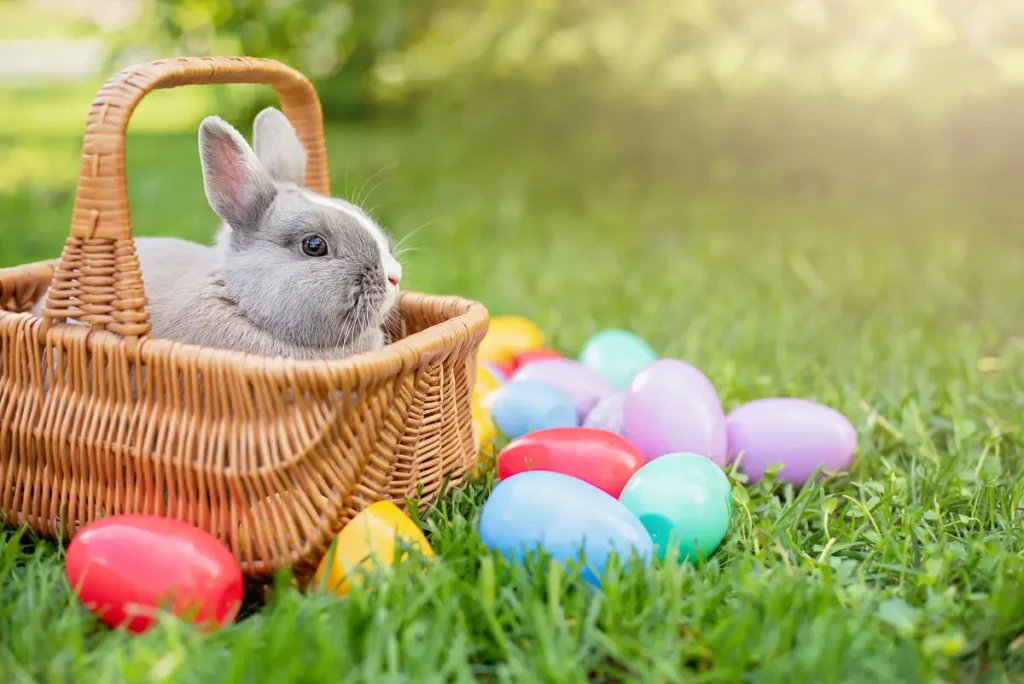 Easter Day and Pentecost
Easter and Pentecost have almost ancient origins and are constantly recurring in very many Swedish households. What is unique about the Swedish celebration, on the other hand, is that it unites Christian traditions with indigenous elements that stretch back to Old Norse culture. Therefore, the holidays in their Swedish vintages have many things that have no equivalent in the rest of the world.
But what are they really about? And how come we celebrate them?
Easter Day
Easter is an annual Christian holiday to celebrate the resurrection of Jesus. That is why it is also called the Day of Resurrection. It always occurs on the first Sunday after the first so-called ecclesiastical full moon after the vernal equinox. Therefore, it takes place on different days every year.
How then is Easter celebrated?
- Eat special foods such as lamb, which stems from both the idea of sacrificial lamb and the pre-Christian blot. Relatives and friends are often invited.
- Special decorations and sweets with a special focus on eggs, which according to some is rooted in the idea of rebirth. Many people choose to focus on egg hunting and surprises
In Swedish and modern fashion, the celebration is in many ways partly secularized. Therefore, the celebration varies greatly.
Pentecost
Pentecost is a Christian holiday when it is celebrated that the Holy Spirit appeared for what became Jesus' apostles. That is why the day is sometimes called the birthday of the modern church. When the day takes place varies between 10 May and 26 June, depending on both year and church attendance.
The celebration of Pentecost, unlike the celebration of Easter, has not gained much traction among those who do not participate in the Church's activities. Celebrating Pentecost is therefore still closely associated with Pentecost and church activities. Unlike Easter Day, many believe that Pentecost should be more spartan in its execution with a focus on paying attention to and taking advantage of what we have around us.
Sweden's National Day
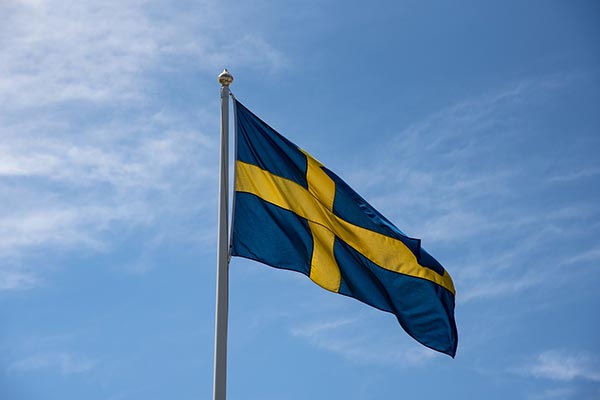 Sweden's National Day
Despite its very special position, Sweden's national day has not actually been a holiday for very long. But at the same time, it has its ancestry that stretches back several hundred years in time. How it is celebrated, on the other hand, varies greatly between different places in Sweden, and in a way its existence is still controversial.
We have taken a deep dive in Sweden's national day.
Old Sweden but modern tradition
Internationally, Sweden is one of the countries that has been united the longest. It is actually one of the oldest kingdoms in the world. But despite this, Sweden's national day is a fairly new phenomenon. It was not until the end of the 19th century that it was decided to celebrate Sweden as a united kingdom.
Today's history is interestingly closely linked to Skansen. The idea with Skansen has always been to represent a kind of living miniature of Sweden, which means that from the very beginning there was an idea to focus on Sweden as a nation state.
When it was decided in 1893 to celebrate Sweden, it was decided to give feedback to June 6, 1523 when Gusta Vasa became king and also a symbol of a united Sweden.
A fairly new holiday
Although the celebration of Sweden's national day now extends more than a hundred years back in time, it was not until 2005 that it became a public holiday. It makes the day an exciting and both new and old phenomenon.
The celebration varies greatly between different places in Sweden. But as flag day, it is a given to hoist the Swedish flag. Unlike other holidays, there is really no real template for how the national day should be celebrated. Skansen in particular continues to be a common denominator and this is also where a large part of the celebration actually takes place. Whether the day will gain greater broad popular support, however, remains unclear.
 English
  Swedish
  Finnish
  Danish
  Norwegian
  Icelandic